Road to Madrid. Stage 1. Madrid to Tres Cantos
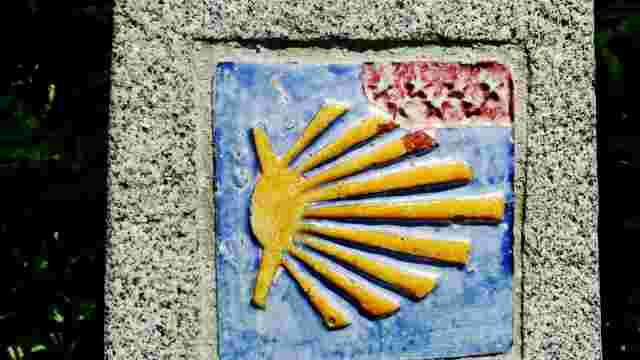
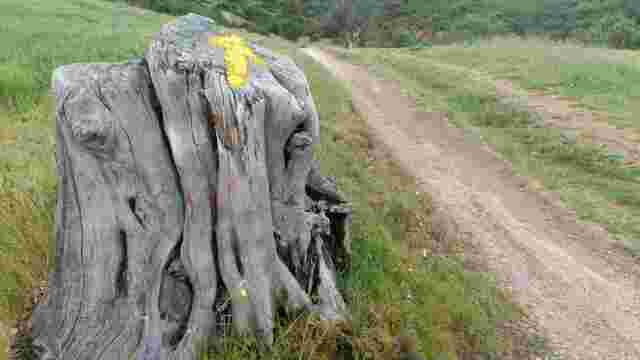
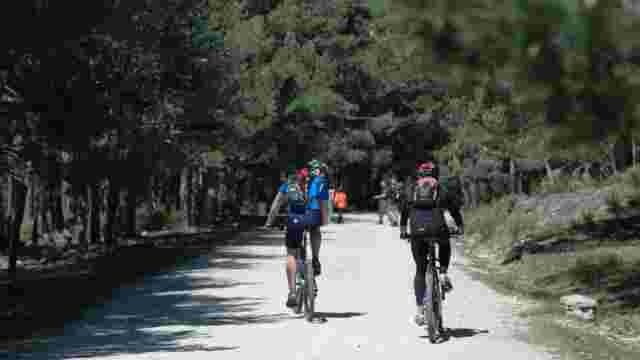
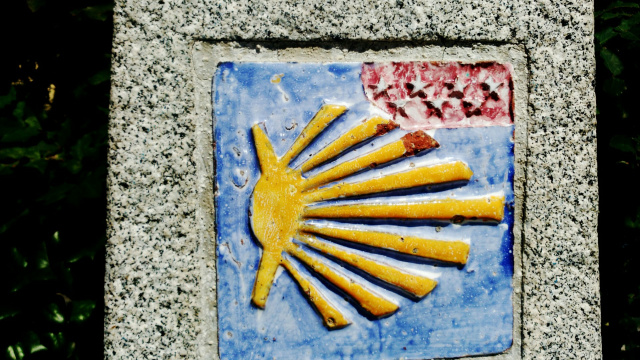
The Way of St. James in Madrid starts at the oldest Jacobean temple in Madrid, which is the church of Santiago and San Juan Bautista, in the Plaza de Santiago, just 200 m from the Almudena Cathedral. From here, pilgrims can begin their pilgrimage by heading towards the church of Santiago el Mayor of the convent of the Comendadoras; the initial route from the Plaza de Santiago is easy; we can do it through the Plaza de Santo Domingo and the streets of San Bernardo and Quiñones to access the church of Santiago el Mayor. From here we go back along Calle de Quiñones and return to Calle de San Bernardo and, on the left, we can go to the Glorieta Ruiz Jiménez, cross it and continue along San Bernardo to the Glorieta de Quevedo and, there, choose the very long Calle de Bravo Murillo. Bravo Murillo street will take us to Plaza de Castilla, there we will take Castellana street passing between the Twin Towers that have been called Puerta de Europa; Castellana street ahead and before arriving at the Hospital de La Paz we turn left into Arzobispo Morcillo street, then we take Pedro Rico street leaving behind the Hospital, on our right, when it ends we find the bridge of the Colonia de Begoña, over the motorway to Colmenar Viejo. After the bridge, we turn left into Calle San Modesto and continue on without losing sight of the Colmenar motorway, skirting the Hospital Ramón y Cajal, keeping it always on our right, and after the RENFE railway halt and the building used for outpatients, we reach the Avenida Cardenal Herrera Oria, which we cross to enter what is now the district, and formerly the village, of Fuencarral. After crossing the Avenida del Cardenal Herrera Oria, we follow the arrows and take the first street on the left hand side to the back of the houses of the Poblado Dirigido de Fuencarral, Calle Montserrat, while the old quarter of Fuencarral is further to the right of this neighbourhood; We advance in sight of the railway track and the motorway, between the houses and the acoustic screens that isolate us from the noise of the railway and the cars, until we reach the junction of Badalona and Caldas de Estrach streets. Leaving the railway track on our left, we continue along Calle Caldas de Estrach; we will soon see, also on our left, the tennis courts of the Madrid Tennis Federation; we continue along Calle de San Cugat del Vallés, leaving now on our left the metal fence that encloses the sports facilities, then we turn left and climb a small embankment following this side, always on our left, of the metal fence that continues delimiting the enclosure of the sports facilities, although now they are not tennis courts. We reach a park and are presented with two options: a) Cross the park diagonally until we reach the road from Fuencarral to El Pardo, which we take to the left and cross over a bridge, with a lot of traffic, the Colmenar Viejo dual carriageway. b) Take the track to the left that borders the sports facilities and cross the Colmenar dual carriageway over a footbridge. Once on the other side of the motorway we enter the PAU of Monte Carmelo, which we cross through the street to reach the wall of the Fuencarral cemetery. Leaving the cemetery wall to our left, we go through a park, descending to cross the railway line and the M-40 via a subway. From here we enter the Cuenca Alta del Río Manzanares Regional Park and leave Madrid in the open countryside, between cereal fields and vegetable gardens, we must continue along the path, which climbs steadily upwards towards the corner of the wall of Monte del Pardo. After a small bridge we will come across a Y fork; we will take the right fork, the one closest to another electricity pylon. Ignoring any other deviation, we will reach a small hill where we will see a group of trees in front of us in the background, and we will head towards a light-coloured building with a slate roof, the Sears Clinic, and towards the wall of Monte del Pardo. When we reach it, we continue in the direction of the railway track, always leaving the aforementioned wall on our left. As we have been able to observe before arriving at the wall of Monte del Pardo, before us opens up a landscape of gentle limestone hills dedicated to agriculture and livestock, with some holm oaks, this landscape will accompany us until we leave Colmenar Viejo, where the proximity of the Sierra de Guadarrama will bring us into contact with gneiss and granite - don't forget that we will be bordering the Pedriza Natural Park - and with mountain pastures and forests of holm oaks, oaks and pines, as well as more abundant streams and watercourses. After arriving at Monte del Pardo, the path goes between the wall and the track for several kilometres until shortly before the Goloso halt, halfway along which there is a subway to cross the railway line, which we must avoid. We reach a small esplanade where there is a closed gate that gives access to Monte del Pardo and from where we can see the aforementioned halt. From the entrance gate to El Pardo, through El Goloso, the path crosses the railway tracks and runs between them and the M-607 dual carriageway. At present, the works of the Madrid-Valladolid AVE have dismantled the route of the Camino, so you have to walk on the service road of the Canal de Isabel II underground pipeline, until you enter the municipality of Tres Cantos, while pilgrims cyclists have the option of taking the cycle lane parallel to the motorway. The Camino runs between the fence of a property belonging to the Madrid City Council and the M-607 motorway, sometimes on a narrow path and sometimes on the aforementioned cycle path. At the gate of the Madrid City Council estate we find the granite milestone corresponding to the town of Tres Cantos, which is on the other side of the motorway. These granite milestones, from Madrid, will accompany us throughout the route through the province of Madrid, and have been placed in the period 2002-2004 by the Consejería de Medio Ambiente de la Comunidad de Madrid in each town. In addition to the milestones, wooden beacons have also been placed inside the towns. If we intend to access the town of Tres Cantos, further on we will find a flyover over the motorway, which we must take. Emergency telephone number: 112. SPECIFIC MEASURES FOR COVID-19. Given the current health alert situation, it is necessary to take into account the following indications: 1. TAKE CARE OF YOURSELF Watch your health and avoid going to the Camino at the slightest sign of illness. Choose dates and times when you will find fewer people on the route. Wear a mask. Its use is compulsory throughout the territory. Carry your own water and do not use public fountains unless strictly necessary. Carry disinfectant gel and wash your hands regularly, especially after using the facilities, or coming into contact with other people or with any element of the Camino. 2. BEWARE OF OTHERS: Always proceed on the right side of tracks and footpaths whenever possible. Keep a distance of at least two metres from other walkers or companions who are not with you. Be courteous to people you may come across and let them know you are approaching if you need to overtake or pass anyone. Avoid long stops and avoid contact and use of facilities you may encounter on the Camino. If you use them, try to clean your hands before and after use and do not leave any kind of residue. If you are accompanied, walk in line to help other people on the Camino to keep the distance with your group or overtake you, keeping the necessary safety distance. 3. TAKE CARE OF THE TRAIL: Before visiting the Camino, make sure you are aware of any changes in conditions or restrictions that may exist in the territories or towns that the Camino passes through. Make sure you are aware of the conditions of capacity that may exist in the facilities or premises to which you can access. Avoid leaving any waste on the Way. If you can, take it with you. While you are on the Camino, follow the indications you may receive from public authorities or the staff assigned to its maintenance or supervision. Enjoy the Camino, and help us to make it a safer place for everyone.